The world is facing major challenges. This affects every single one of us, us as a society, and us as a company. We are aware that online retail entails an increased carbon footprint. With every step and every bit of growth that is possible thanks to you as part of our amazing craft beer community, we also want to give something back. We have taken several measures to save as much CO2 as possible, offset our emissions , and even neutralize additional CO2 .
Shipping at Beer Belly Cologne is climate neutral! We are a partner of "Planet" and therefore automatically offset the CO2 emissions generated during the individual shipping of our packages.
But that's not all. For every order you place with Beer Belly Cologne, the Eden Reforestation Project plants a tree, and together we improve our carbon footprint. Learn more about the project here . Our Impact Report provides transparent updates on our progress.
We collect all our beers directly from regional breweries. Short and direct routes are good for the beer and the environment.
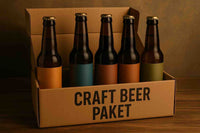
We also receive beer deliveries by mail. We reuse the cardboard boxes provided by the breweries to send you the beer. So don't be surprised if you receive a used, not new, box.
To save resources, especially for our shipping partners, we pack your order in the smallest possible packaging size.
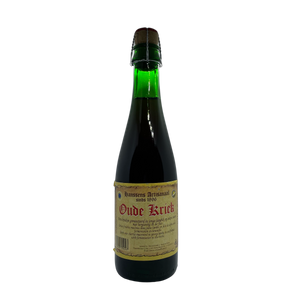
Lambic is a Belgian beer style, top-fermented and above all – sour! It originated in the Pajottenland region around Brussels. Today, you can find lambics pretty much anywhere brewers are willing to try their hand at complex beers. And they can vary greatly. Young or old, infused with fruit or blended…
The base beer is a wheat beer, brewed with approximately 40% raw wheat and 60% barley malt. What makes Lambic special is its very long maturation. This lasts at least six months and can be extended to around six years. So, whether it's "young" is always a matter of perspective.
Lambics are traditionally fermented spontaneously, meaning without the brewer's assistance or addition of yeast. After boiling, the wort is simply placed in open cooling vessels and exposed to the air, where it automatically becomes infected with bacteria and wild yeasts (e.g., Brettanomyces bruxellensis, Brettanomyces lambicus, Saccharomyces cerevisiae) naturally present in the air. Of course, each location has a different composition of microflora. Therefore, every lambic tastes unique, depending on its origin – so it's clear that an American craft lambic will taste quite different from an authentic Belgian version.
Open fermentation is hardly used in Belgium these days, as such spontaneous fermentation is far too imprecise and unpredictable. Instead, brewers can now order specially formulated and pre-made lambic microbial mixtures to ensure that the beer always tastes as consistent and good as possible.
Gueuze
It is produced by blending lambic that is usually one year old and not yet fully fermented withlambic that is usually two to three years old . The mixture is then bottled, where a second fermentation produces, among other things, carbon dioxide, which is lost in the lambic during aging in barrels. The gueuze maker passes the lambic beer through several lambic kettles until the blend reaches the required quality.